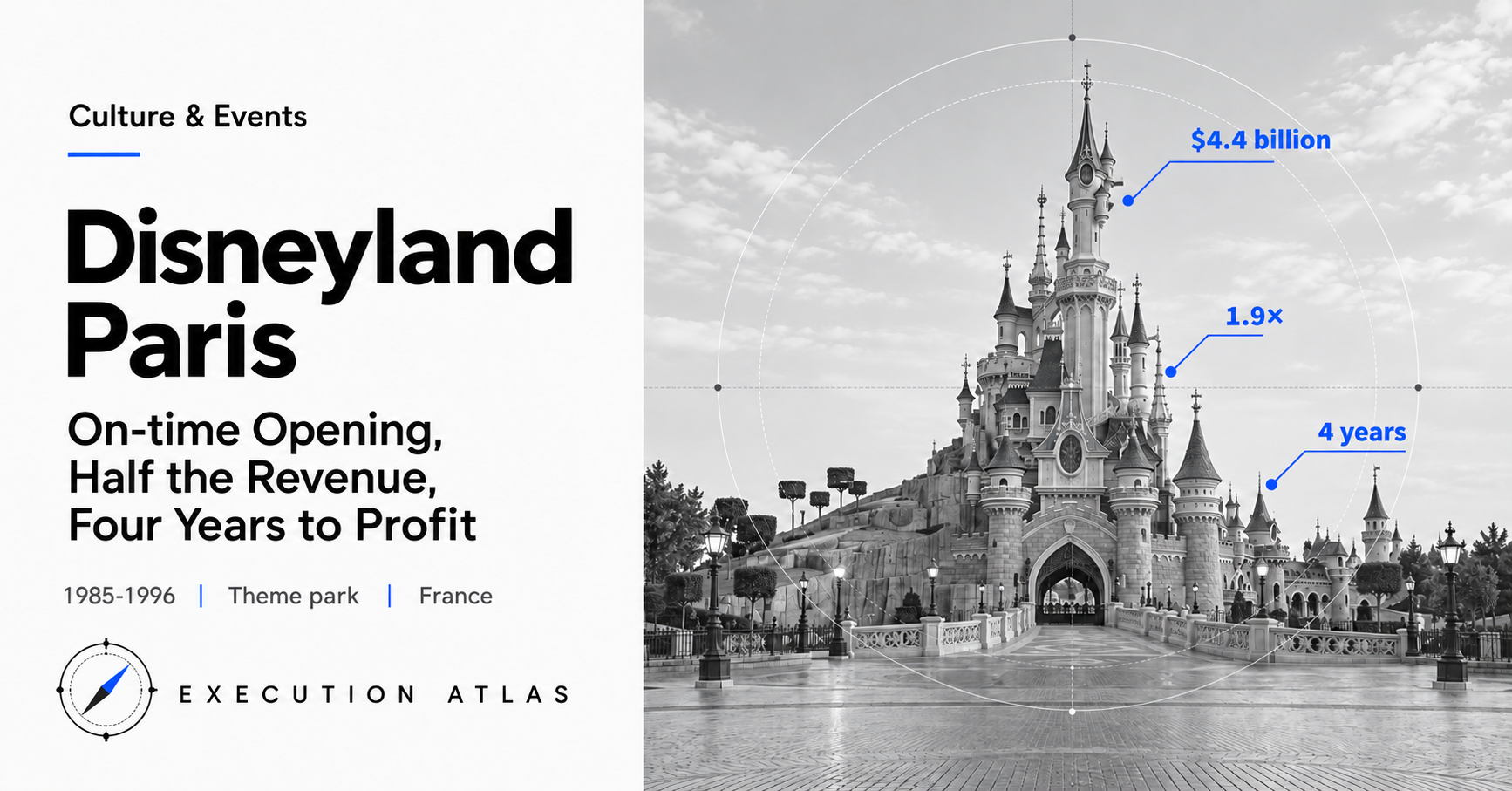
Initial plan: $2.3 billion. Target opening: April 1992. Expected first-day attendance: 60,000. Seven hotels with 5,800 rooms ready to go.
Actual investment: $4.4 billion. Opening date: April 12, 1992 — on schedule. First-day attendance: 25,000. Within 18 months of opening, debt had ballooned to FFr 21 billion, and the company stood on the edge of insolvency.
The schedule held. The quality held. But the park that opened sold half of what was planned.
European intellectuals called it a “cultural Chernobyl.” Farmers blockaded the gates with tractors. A far-right party called for a boycott. Nine weeks after opening, 1,000 employees had quit.
It took four years for the park to turn a profit. Was it a failure? The answer appears somewhere unexpected.
Mission
In 1984, The Walt Disney Company made a serious push into Europe. For Michael Eisner, who had taken the CEO role the previous year, it would be the fourth location after two US parks (California and Florida) and Tokyo (opened 1983, operated under license by Oriental Land). It would be the first overseas venture with direct Disney capital.
1,200 candidate sites. Four years of evaluation. Narrowed to four: two in France, two in Spain.
The deciding factor was simple: Marne-la-Vallée, 32 km east of Paris. Within a four-hour drive: 68 million Europeans. Within a two-hour flight: another 300 million. The population density was an overwhelming advantage. Spain had better weather, but couldn’t match the demographics.
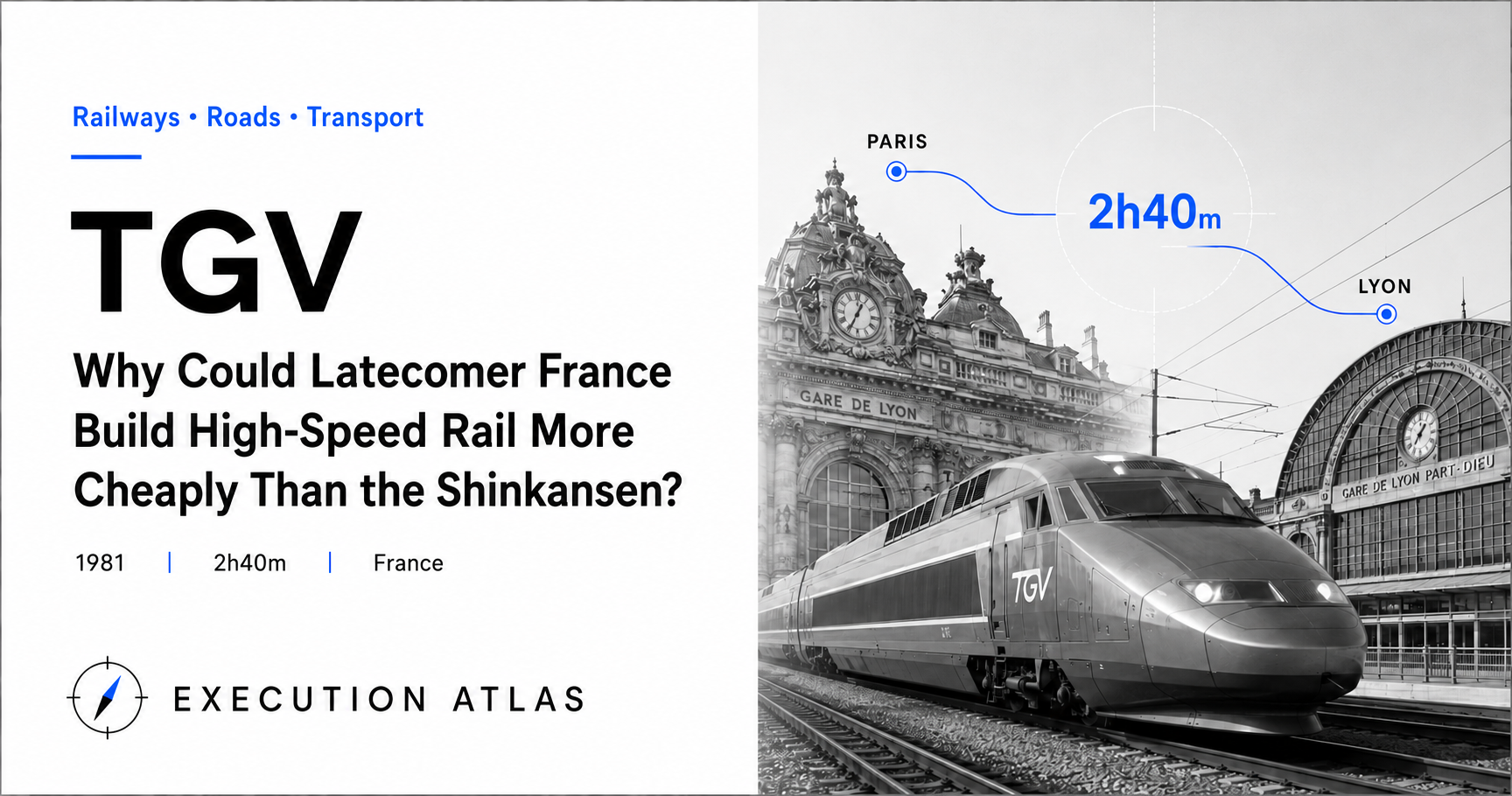
French government support was strong. On March 24, 1987, the “Agreement on the Creation and Operation of Euro Disneyland” was signed at the Matignon Palace. Favorable land supply. Rail connections (extension of RER Line A, dedicated TGV station). Tax relief. One requirement: bring jobs, technology, and tourism from America to Europe. When Eisner addressed European press, he said: “Europe needs Disney’s magic.” What needed exporting was “magic”; what needed localizing was real estate and tax policy.
At the requirements stage, what would actually happen on the ground was still invisible.
Design
20 square kilometers (4,940 acres) of land were supplied to Disney in 1987 — roughly one-fifth the area of Paris. The plan included two parks, seven hotels, a shopping mall, offices, housing, a golf course, and its own railway station. The first phase alone projected a total investment of $2.3 billion.
Hotel design was emblematic. In March 1988, Disney convened an architectural council: Frank Gehry, Michael Graves, Robert A.M. Stern, Stanley Tigerman, and Robert Venturi. Each was assigned a theme: New York, Santa Fe, Cheyenne, Chesapeake Bay, Newport. All seven hotels would evoke American regions. In the middle of Europe: seven pieces of America.
Capacity was originally planned at 5,200 rooms, expanded to 5,800 by opening. The number was based on Walt Disney World Florida’s initial configuration. In America, park visits assumed multi-night family trips. Paris was designed on the same assumption.
Operations manuals were transferred almost verbatim from US versions. No alcohol on park property (Disney tradition). Employee dress codes — nail color restrictions, no beards for men, no excessive jewelry for women. Training and conduct guidelines. All translated into French from Disney University materials.
Physical construction was led by Disney Imagineering. Construction period: approximately four years. For an organization that excelled at operational excellence, physically building was their strongest domain.
Two assumptions went unverified at the design stage: Do Europeans actually stay multiple nights? How much do they spend inside the park? These two factors were the pillars of the revenue model — yet American numbers were simply plugged in.
Execution
August 1988: groundbreaking. April 12, 1992: opening. Three years and eight months. On schedule.
Construction costs swelled. Original plan $2.3 billion; final investment $4.4 billion — 1.9 times the estimate. In 1991, the project patched the overrun with $144 million in additional equity and $522 million in additional borrowing. Much of the cause: adapting American materials and equipment to French standards, premium construction to realize the individualistic designs of the architectural council, hotel spec upgrades. Internal pressure: if it bears the name “Euro,” it must exceed American quality.
When the hardware was complete and opening day arrived, the gap between plan and reality migrated to the revenue side.
April 12, 1992. Planned attendance: 60,000. Actual: 25,000–30,000.
A confluence of factors: a major RER strike paralyzed the Paris commuter rail network; multiple bomb threats at the park, all unsubstantiated; bad weather; dismissive European media coverage running since before opening; and lingering slump in European travel demand following the Gulf War.
What happened that day transformed into numbers over 18 months.
FY1992 (first full year): net loss of FFr 188 million. By end of 1993: cumulative losses exceeded FFr 5 billion, total debt exceeded FFr 21 billion, stock price below one-quarter of its all-time high.
Every gap between plan and reality traced back to assumptions in the revenue model.
Europeans didn’t stay multiple nights. They came as day-trippers from Paris and left by evening. The 5,800 hotel rooms were oversupplied from day one. First-year hotel occupancy: 60%. Revenue per guest well below US levels. Visitors came through the gates but didn’t spend on merchandise and food. European families didn’t share Americans’ habit of eating inside the theme park.
The no-alcohol policy — in a country that drinks wine by the glass at lunch — was literally incomprehensible. “You can’t drink wine in the park” became a target of mockery in the European press. Dress codes were reported to the French Labor Inspectorate. Unions protested: Americans are suppressing French individuality. Nine weeks after opening, roughly 1,000 of 10,000 new hires had left — half voluntarily.
The brand attacks continued. Theater director Ariane Mnouchkine had been repeating “Euro Disney is a cultural Chernobyl” since before opening. With the 1986 Chernobyl disaster still fresh in European memory, that phrase became a definitive frame. The far-right National Front called for a boycott: don’t let Americans impose their language on France. In 1992, French farm unions blockaded the park’s gates with tractors — protesting US demands to cut agricultural subsidies, not Disney specifically, but the park was chosen as the symbol.
The organization that delivered the project on schedule was off by half on revenue. The cause wasn’t forecasting precision — it was forecasting premises. European lodging patterns, spending patterns, cultural reactions. None were locally verified; American numbers were simply substituted.
People
Michael Eisner had just taken the CEO role in 1984. Age 42. Recruited to Disney on the strength of his Paramount track record, he was driving what would become known as the “Disney Renaissance.” The European expansion was his biggest bet. His words at the press conference: “Europe needs Disney’s magic.” That phrasing predicted the entire problem. What was being exported was “magic”; what was being localized was “real estate.” The sequence was backwards.
The first chairman was Robert Fitzpatrick. Former president of the California Institute of the Arts, appointed for his understanding of French culture. He managed the contracts and the opening, but in the eyes of Disney headquarters he was a peripheral figure — without authority to rewrite the American operations manual. On January 18, 1993, as cumulative losses mounted, he announced his resignation. On April 12 — exactly one year after opening day — he departed. The official reason: starting a personal consulting firm. In practice: a change of responsible party.
His successor was Philippe Bourguignon. French. Former Executive Vice President of Real Estate at Euro Disney. A practitioner of marketing and hotel management. The moment he became chairman in 1993, the rewriting of the American manual began: alcohol service permitted in the park; entry prices and hotel rates revised; European-focused marketing strategies; dress codes relaxed; a shift from “make them stay multiple nights” to “generate revenue from day-trippers too.”
In 1994, Saudi Prince Al-Waleed bin Talal acquired a stake and joined management. Debt restructuring negotiations with the banks concluded. The name changed from Euro Disney to Disneyland Paris — dropping the “Euro,” putting the city brand “Paris” front and center. A small move, yet effective at resetting brand perception.
Operations began to change after the nationality at the top of the decision-making hierarchy changed. That this was no coincidence is shown in the numbers.
July 1995: first quarterly profit of $35.3 million. FY1995 (September year-end): 10.7 million visitors (up 21% year-over-year), hotel occupancy 68.5%, full-year net profit $22.8 million. 1996: 11.7 million visitors. Annual profits became the norm.
Exactly two years since Bourguignon took over. Exactly three and a half years since opening.
Legacy
2002: Walt Disney Studios Park opened on adjacent land — the second park that had always been in the plan.
As of 2024, Disneyland Paris is one of Europe’s largest single tourist attractions, with annual attendance exceeding 10 million. The 5,800 hotel rooms derided as excess at opening were eventually absorbed by the second park and surrounding development (the urban planning of Val d’Europe).
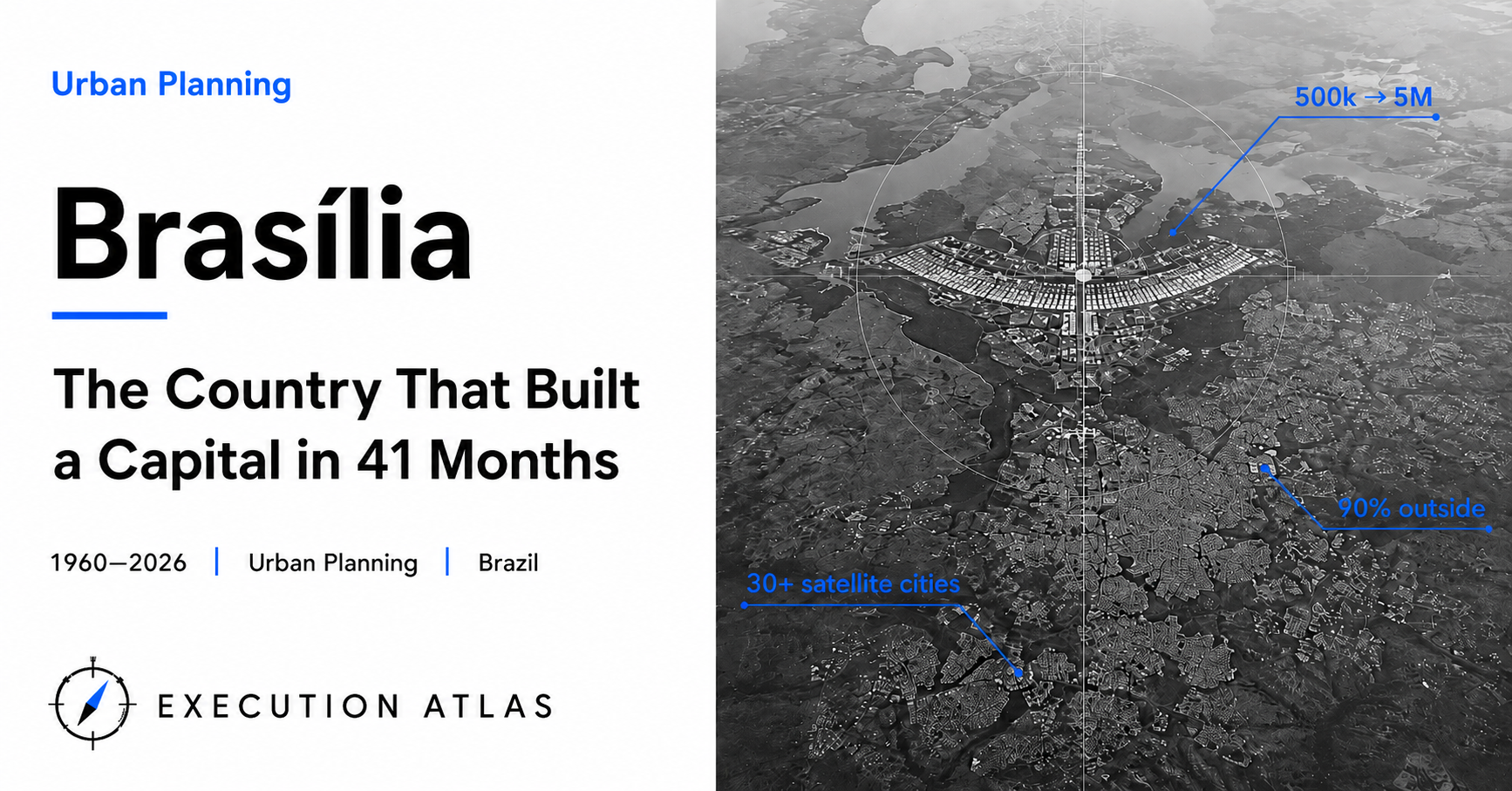
Marne-la-Vallée, east of Paris, was an agricultural area of several thousand residents before Disney arrived. Today, as Val d’Europe, it is a satellite city of over 30,000 people, with RER Line A and a TGV station connecting Paris to London and Brussels. The promise of “regional development” extracted by the French government in the 1987 agreement materialized as a city.
The “cultural Chernobyl” phrase went out of use in the late 1990s. From the 2000s onward, French media shifted to describing the park as national tourism infrastructure. Mnouchkine herself never retracted the statement, but the context changed — from opening-day polemic to historical quotation.
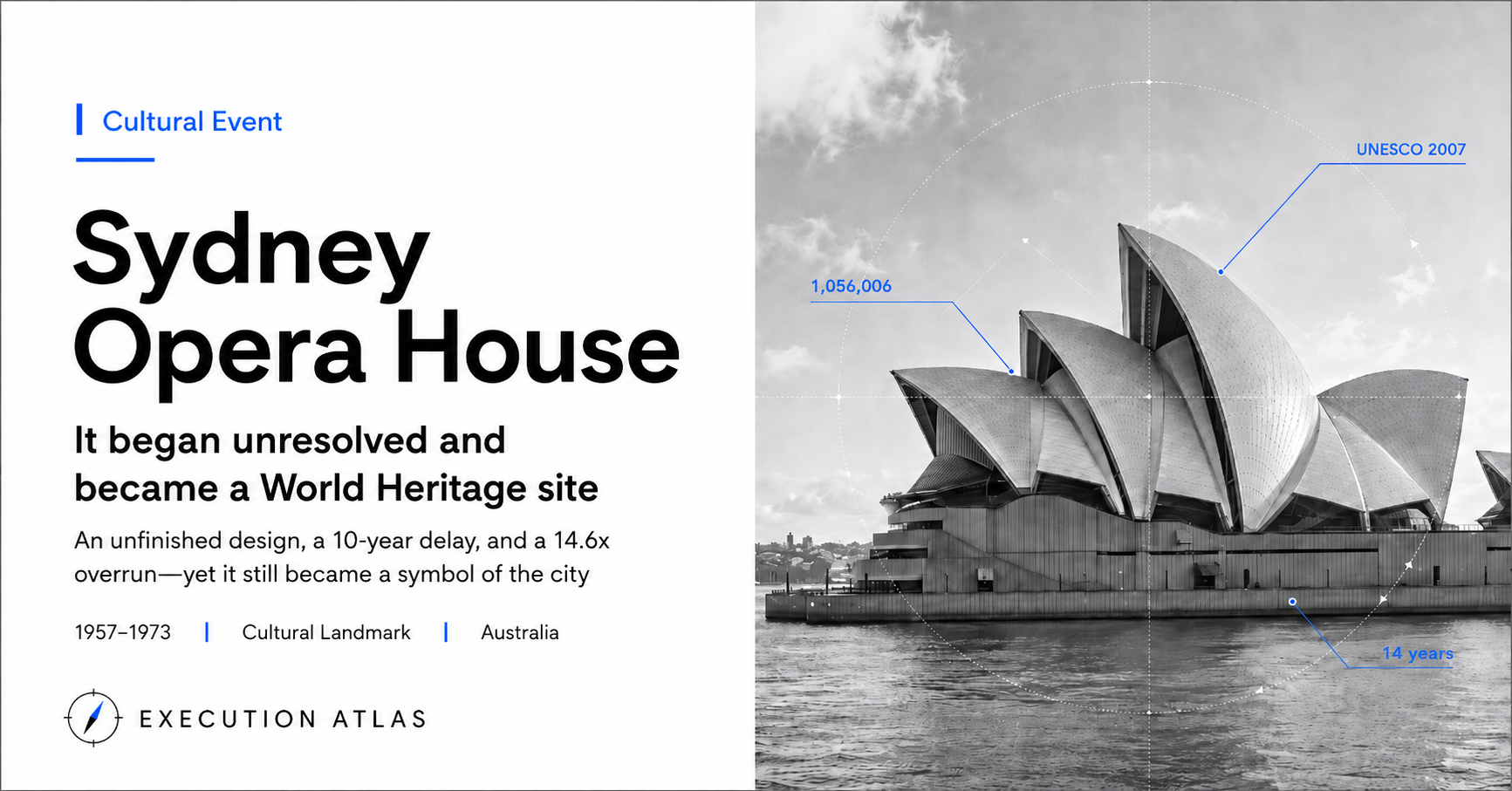
The $4.4 billion investment was recouped. Not 14 years late. Four years late. Compared with the Sydney Opera House’s ten-year delay and 14.6x cost overrun, these numbers sit within a recognizably normal range. Even so, “the failure of Euro Disney” was written into early-1990s management textbooks as a canonical example of failed overseas expansion.
The textbook description and the long-run numbers diverge. That divergence is the real subject of this project.
Key Takeaway: If the Hardware Functions, Buy Time to Rewrite Operations
Two readings exist for the Euro Disney crisis.
One is “a case study in failed overseas expansion.” Cultural friction, overinvestment, optimistic projections. Standard classroom material for business schools.
The other is the reading offered here: was it a “design failure” crisis, or an “operational learning” crisis? That distinction decided every course of action taken in the early 1990s.
A design failure means what was built cannot fulfill its purpose. Wrong location. Insufficient technical specifications. Critically inadequate capacity. The only option is to pivot — move the park, rebuild the specs, add capacity. The cost of remediation often exceeds the original investment.
An operational learning failure means what was built works, but operations don’t fit the market. Pricing. Service design. HR rules. Promotion. Time can fix this. What’s needed to rewrite operations: capital, decision-makers who understand the local context, and a running period for learning.
In 1994, Euro Disney was carrying FFr 21 billion in debt, on the edge of insolvency. Three options were available: liquidate, shrink, restructure.
What Disney headquarters, the banking syndicate, and the French government chose was restructuring. $144 million additional equity. $522 million additional debt. Prince Al-Waleed’s capital. Name change. A French national at the top.
The basis of that judgment was how they read the 1992–93 operational data. Visitors were actually coming — millions per year, half of plan, but not zero. The reason they weren’t spending on merchandise and food was a product design, price design, and cultural response problem — not a location or hardware problem. The choice of Marne-la-Vallée, by population density, was still correct. Unlike the Sydney Opera House, which broke ground before its structural solution was found, this project built something that functioned the moment it opened.
“The hardware is right; fix operations and it will run.” The bet was placed on that read. It paid off in four years.
What happens when you misread the distinction?
Misidentifying a design failure as “operational learning” means continuing to pour capital into an unfixable project — the UK Millennium Dome, France’s Superphénix fast breeder reactor. Each failed to turn around with time, and was eventually wound up with larger losses.
Conversely, misidentifying an operational learning failure as “design failure” and pulling out early means losing a recoverable business. Many overseas subsidiaries sold at distressed prices every time performance faltered have this structure.
The decision criterion is practically simple: is the hardware operating as intended? Is the problem happening at the operations layer? If yes to both, buy time. If no, pivot or close.
One more point — secondary but sharp: rewriting the operations layer cannot be completed by frontline staff alone. Whether the top decision-maker understands the local culture determines how quickly dress codes, pricing, leave policies, and marketing can be rewritten. Fitzpatrick’s departure and Bourguignon’s arrival in 1993 was an organizational sign-change: transfer rewriting authority to a French national. That turned the business profitable within two years.
If the top had continued to trust the American manual while delegating rewriting to frontline staff, the same time bought likely would not have been enough.
Is the hardware functioning? Does the top decision-maker understand the local context? If both are in place, initial losses from overseas expansion can be recovered with time.
If they aren’t — no amount of money buys enough time.
Sources
- Wikipedia, “Disneyland Paris” (https://en.wikipedia.org/wiki/Disneyland_Paris). Site selection (1,200 → 4 → 1), investment figures, hotel count, architectural council, opening date.
- Wikipedia, “Euro Disney S.A.S.” (https://en.wikipedia.org/wiki/Euro_Disney_S.A.S.). Financial trajectory, 1994 restructuring, name change.
- EBSCO Research Starters, “Euro Disneyland Opens” (https://www.ebsco.com/research-starters/politics-and-government/euro-disneyland-opens/). Opening overview, $4.4B figure, early loss breakdown.
- Variety, “Fitzpatrick, EuroDisney Part Ways,” January 1993 (https://variety.com/1993/biz/news/fitzpatrick-eurodisney-part-ways-103038/). Timing and background of first chairman’s resignation.
- Washington Post, “Cheers, Jeers Greet Disney Debut in Europe,” April 13, 1992 (https://www.washingtonpost.com/archive/politics/1992/04/13/cheers-jeers-greet-disney-debut-in-europe/e72516b5-2dbe-4314-989a-1a4ace816123/). Opening day attendance, transit strike, bomb threats, intellectual reactions.
- Baltimore Sun, “Magic Kingdom or ‘Cultural Chernobyl’?”, April 19, 1992 (https://www.baltimoresun.com/1992/04/19/magic-kingdom-or-cultural-chernobyl/). Mnouchkine’s statement, National Front boycott, farmer protests.
- FundingUniverse, “History of Euro Disney S.C.A.” (https://www.fundinguniverse.com/company-histories/euro-disney-s-c-a-history/). $144M equity + $522M debt breakdown, FFr 5B / 21B figures.
- Campbell Law Review, “Mickey Goes to France: A Case Study of the Euro Disneyland” (https://scholarship.law.campbell.edu/cgi/viewcontent.cgi?article=1300&context=fac_sw). Legal structure of the Matignon agreement, French government incentives.
- AllEars.Net, “The Initial Failure of EuroDisney Is STILL Affecting Disney 30 Years Later,” May 26, 2025 (https://allears.net/2025/05/26/the-initial-failure-of-eurodisney-is-still-affecting-disney-30-years-later/). Structural assessment looking back from today.