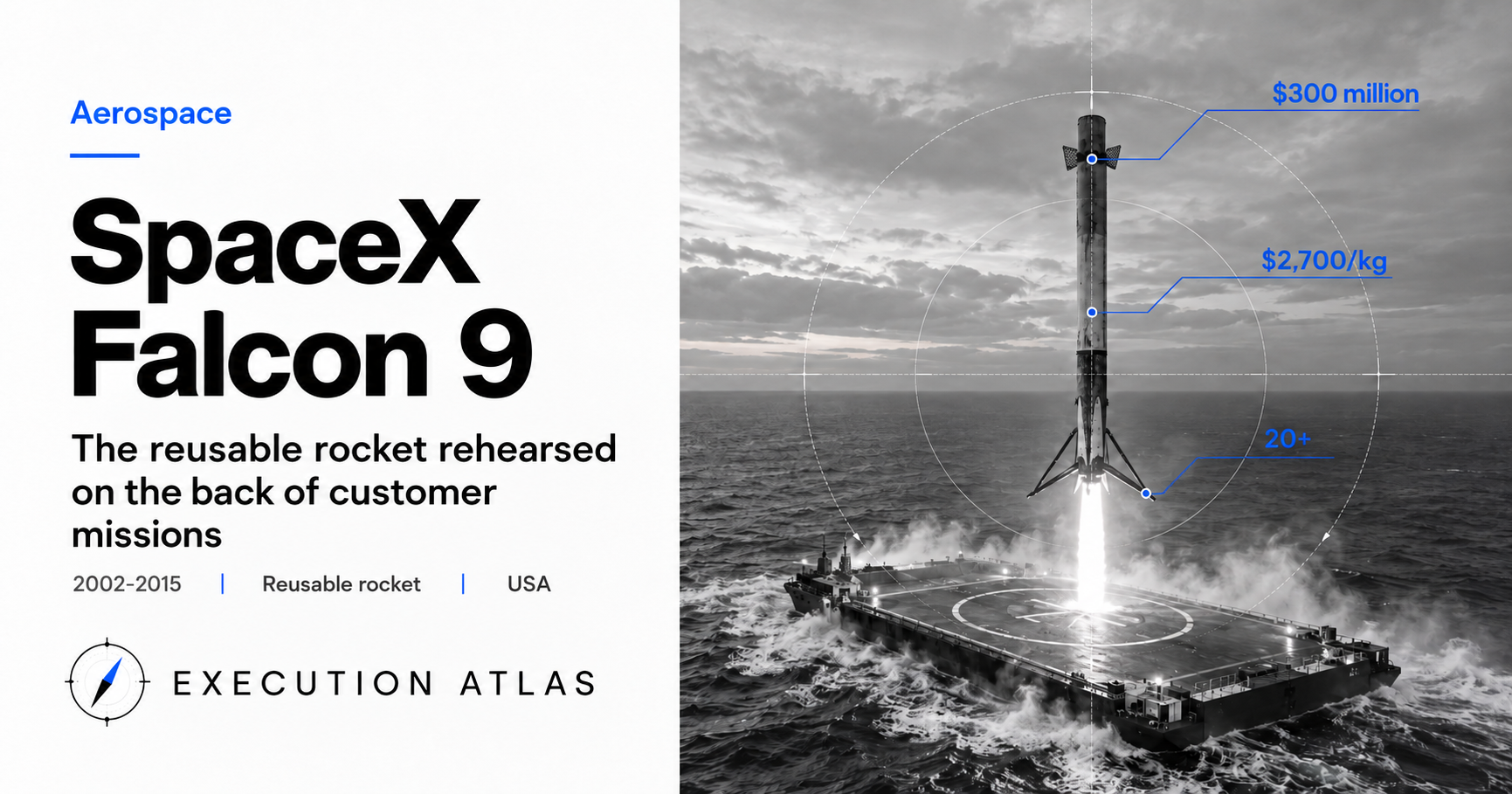
NASA’s internal cost model estimated $1.7 to $4 billion. SpaceX actually spent about $300 million. That’s a full order of magnitude apart.
In 2008, SpaceX had enough money for one, maybe two more launches. They bet it all on the fourth flight of Falcon 1, and it worked. Three months later, NASA awarded them a $1.6 billion ISS resupply contract. Ten years after that, the Falcon 9 first stage was landing vertically on a drone ship at sea, and the same booster was being flown more than 20 times. Launch costs dropped from roughly $54,000 per kilogram during the Space Shuttle era to about $2,700 per kilogram for a reused Falcon 9.
This cost compression was a technical victory, but it was equally a victory of design — specifically, the design of keeping technology development structurally separate from customer commitments.
Mission
In the early 2000s, the cost of reaching orbit had barely changed since the 1960s. The launch business was dominated almost entirely by government agencies and the Boeing-Lockheed Martin joint venture ULA (United Launch Alliance). Cost-plus contracts were the norm, giving contractors little incentive to improve efficiency.
The idea of reusing rockets was not new. The Space Shuttle, which first flew in 1981, was designed to reuse the orbiter and parts of the solid rocket boosters. But in practice, each launch ended up costing around $1.5 billion, as the weight of refurbishment processes wiped out the anticipated savings. The industry had reached a verdict: reuse doesn’t reduce costs.
SpaceX, founded by Elon Musk in 2002, started by questioning that verdict. The raw material cost of a rocket is only about 2–3% of its finished price. Nearly everything else is labor for manufacturing and assembly. If you could replace that structural cost with fuel costs instead, the arithmetic suggested you could cut costs by an order of magnitude.
From that premise, Musk gave his team a single internal requirement: recover the first stage without sacrificing the ability to put payload into orbit.
Design
There were multiple ways to attempt reuse, including approaches from earlier concepts: parachute recovery into the ocean, gliding back on wings, or decelerating the first stage with rocket engines and landing it vertically. The Shuttle’s solid boosters used parachutes. SpaceX chose propulsive vertical landing.
That choice came with real design costs. To bring the first stage back, you need to reserve landing propellant — propellant that comes out of the launch budget. Less propellant margin means less payload capacity. The industry’s rule of thumb was that the reuse penalty would run 30–40% of payload.
SpaceX pushed back against that number through engine count and propellant design. By clustering nine Merlin engines, they preserved enough performance margin to deliver commercial satellites to orbit even after reserving fuel for landing. By mass-producing a single engine type, they drove down unit cost. Falcon 1, Falcon 9, and Falcon Heavy all use the same Merlin. The more engines you build of one type, the steeper the learning curve drops.
The other critical design decision was how landing tests were positioned. Early Falcon 9 vehicles carried no landing legs and no grid fins. The first stage separated and fell into the ocean. But between separation and splashdown, SpaceX fired the engines to decelerate and measured the trajectory — a “boostback” rehearsal with no hardware at stake. By the time the first stage separated, the customer’s mission was already a success. Whatever happened after that was free to fail.
It was a deliberate structure: keep the technical bet isolated from the commercial outcome.
Execution
In June 2010, Falcon 9 v1.0 made its first successful flight. In 2012, a Falcon 9 carrying the Dragon spacecraft completed the first commercial docking with the ISS.
That same year, reuse development was running in parallel. Grasshopper, a test vehicle at SpaceX’s McGregor, Texas facility, made eight low-altitude vertical takeoff and landing tests. Thrust vector control, grid fins, and landing leg algorithms were all rehearsed on a dedicated test vehicle. Only elements that had completed testing were integrated onto the flight vehicles.
On August 22, 2014, F9R Dev1 veered off course during a three-engine test and was destroyed by its flight termination system. No ground damage, no customer mission affected. The structural separation between test and flight worked exactly as intended.
On operational flights, landing attempts were added as a bonus after successful payload delivery. In September 2013, Falcon 9 v1.1 flew for the first time with landing legs attached. In January 2015, the first drone ship attempt ended with the booster tipping over and exploding. In April, the second attempt achieved touchdown but the vehicle tipped sideways on contact.
On June 28, 2015, the CRS-7 mission broke up 2 minutes and 19 seconds after launch. A strut supplied by a vendor had failed, allowing a helium pressure vessel in the second stage to break free and over-pressurize the liquid oxygen tank. SpaceX grounded Falcon 9 for six months.
Most organizations use a halt like that to restore prior state — fix the failed component and resume from where things were. SpaceX took the opposite approach. The return-to-flight mission became the first flight of Falcon 9 Full Thrust, a new version that had been waiting in the wings, featuring higher thrust and densified liquid oxygen propellant — and it would attempt a first-stage landing at the same time.
On December 22, 2015, at 01:29 UTC, Full Thrust launched from Cape Canaveral, delivered eleven ORBCOMM satellites to orbit, and landed its first stage at Landing Zone 1, about nine minutes and 45 seconds after liftoff. The callout in mission control was a deliberate echo of Apollo 11. “The Falcon has landed.”
It was the first time in history that an orbital-class rocket had recovered its first stage.
The record since then has rewritten industry assumptions. April 2016: first successful drone ship landing. March 2017: first reflight of a recovered booster. 2018: Block 5, designed from the start for more than ten reuses, made its first flight. Falcon 9 flew 132 times in 2024, and was on pace for 170 in 2025. A single booster has now flown more than 20 times.
People
In 2008, Musk was having what he later called his worst year. Falcon 1 had failed three times in a row. Tesla was near bankruptcy. Musk was going through a divorce. His bank account held enough to fund one more Falcon 1 flight.
In later interviews, Musk described starting each morning by asking himself whether he was losing his mind. He poured personal funds into the company to keep employees paid.
On September 28, 2008, Falcon 1’s fourth flight from Kwajalein Atoll became the first liquid-fueled rocket ever launched to orbit by a private company. Twelve weeks later, on December 23, NASA awarded SpaceX the $1.6 billion CRS contract. SpaceX was not just extended — it was transformed.
Gwynne Shotwell joined in 2002, near the company’s founding. An aerospace industry veteran, her domain was contracts and cash flow rather than engineering. If Musk was the external face of SpaceX, Shotwell was its operational spine. Through three consecutive Falcon 1 failures, she kept customer relationships alive and brought in the next contract before the previous funding ran out.
Tom Mueller, the chief designer of the Merlin engine, came not from NASA or Boeing but from TRW. When he joined SpaceX, he had been building small liquid rocket engines as a hobby in his garage. At established aerospace firms, new engine development had effectively stopped for decades. Mueller was one of the few working engineers who had actually designed a liquid engine from scratch.
Hans Königsmann, a German-born engineer who joined SpaceX early on, oversaw flight reliability. After CRS-7, he traced the failure to the failed strut within days. “We had bought a product with certified documentation,” he later said. “But certification and actual performance are different things.”
Legacy
As of 2026, Falcon 9 accounts for more than half of global commercial launches. Cumulative launch count exceeds 680, with a first-stage landing success rate above 95%. No crew capsule lost, no astronaut fatalities.
The list price for a Falcon 9 Block 5 is around $69.75 million. With a reused booster, it’s less. Per-kilogram to orbit: roughly $2,700 on a reused flight. Compared to about $54,000 per kilogram during the Shuttle era, that’s roughly a 20-fold reduction.
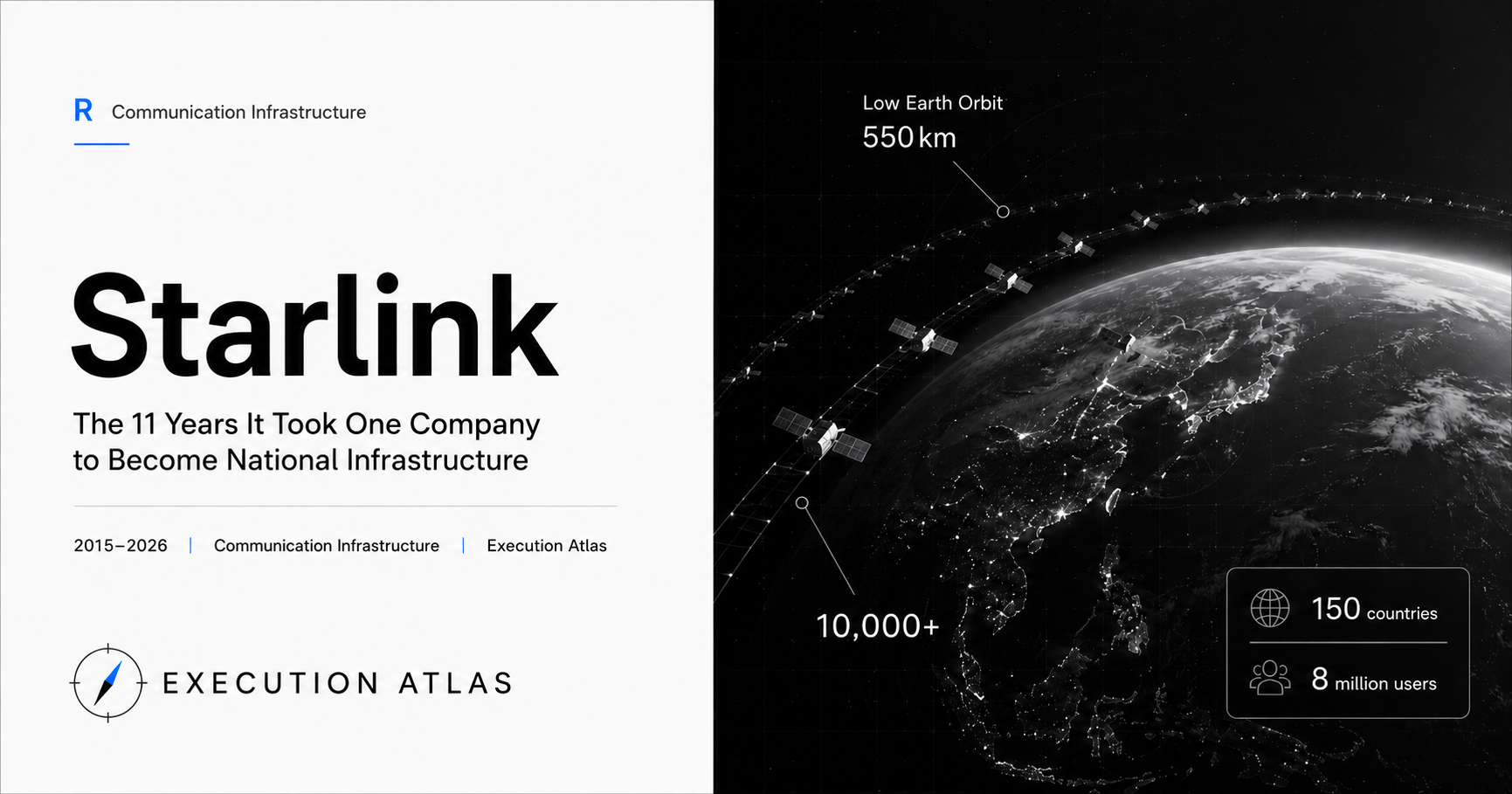
That shift in cost structure rewrote the economics of space. Starlink has now deployed more than 6,000 satellites into low Earth orbit. At Shuttle-era prices, a constellation at that scale would be financially impossible. Starlink’s business model has Falcon 9 reusability as an implicit prerequisite.
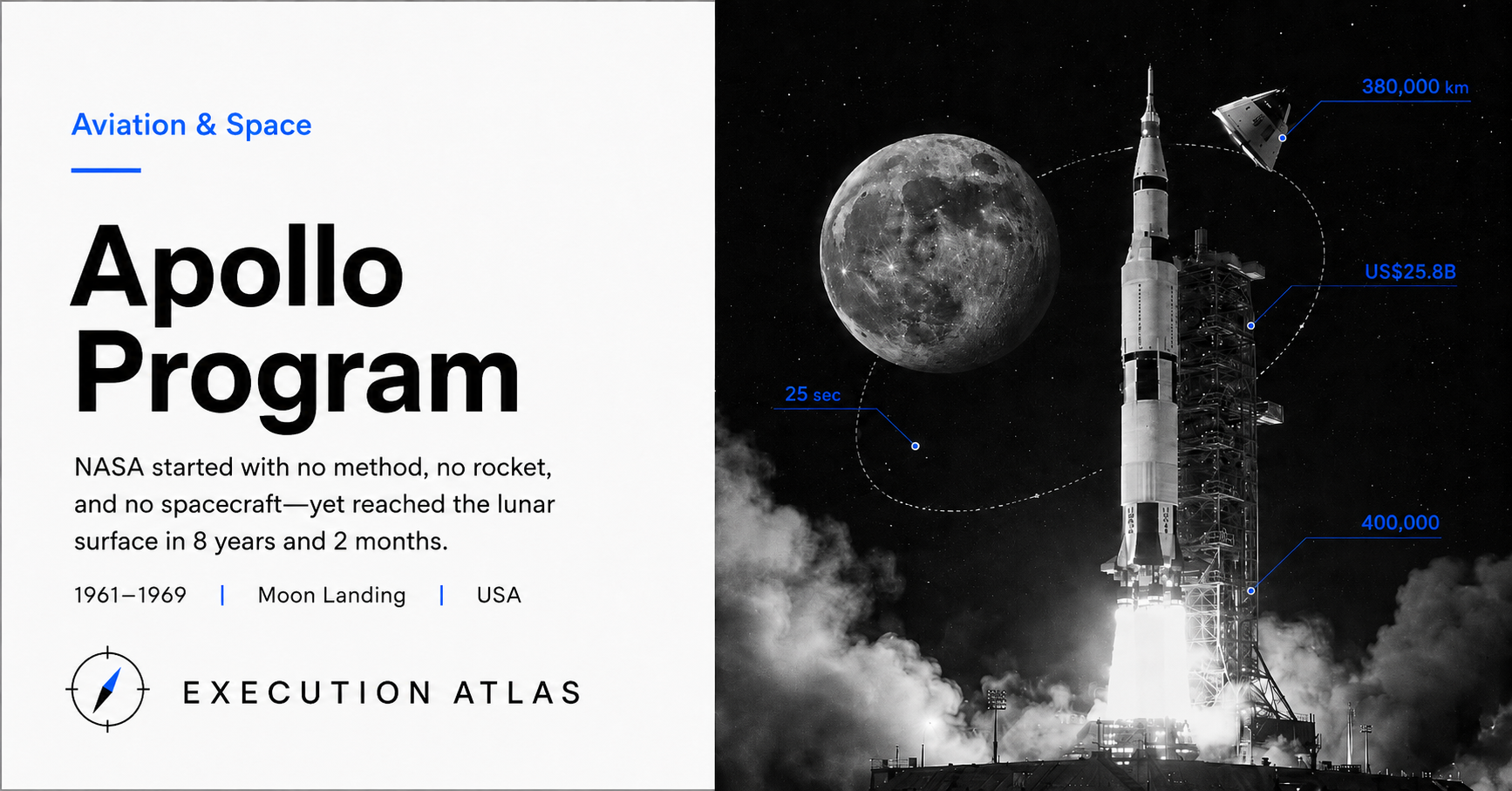
NASA acknowledged the gap explicitly in a published comparison. If NASA itself had developed Falcon 9, the agency estimated it would have cost around $4 billion. SpaceX spent roughly $300 million. Even adjusting for inflation, the comparison to Apollo (about $100 billion total), Space Shuttle (about $50 billion), and SLS (about $24 billion) puts Falcon 9 in a different cost category entirely.
SpaceX’s approach became the template that ULA, Rocket Lab, Blue Origin, and Chinese commercial launch companies all moved to replicate. The fixed-price, milestone-based contract structure of COTS and CRS replaced the cost-plus model as the standard for NASA commercial programs. The industry’s production model changed.
Lesson: Don’t Put the Technical Bet and the Commercial Promise on the Same Deadline
Almost every Falcon 9 landing test was executed as an add-on to a commercial mission — a bonus run after the customer’s satellite was already in orbit. The first stage had landing fuel and control algorithms loaded. If the landing failed, the customer mission had already succeeded.
The Space Shuttle couldn’t adopt this structure. The orbiter was itself a crewed vehicle and itself the commercial mission. Technical experimentation and crew survival were tested simultaneously on the same vehicle. The astronauts killed in Challenger and Columbia were not test subjects on an experimental prototype — they were crew on operational missions.
When you put the technical bet and the promised outcome on the same deadline, a technical failure becomes a business failure. SpaceX’s approach of tacking landing tests onto the post-separation phase of operational launches was a structural separation of rehearsal from production. Rehearsal could fail. Production could not. Both lived on the same vehicle, but in different phases of the same flight.
The second piece of separation was how SpaceX used the CRS-7 downtime. Instead of restoring prior state, they used the six-month stand-down to simultaneously complete the transition to Full Thrust and integrate first-stage landing hardware. The moment you make “get back to where we were” the goal, the downtime becomes pure loss. If you design the downtime to absorb a pending upgrade you’d been building toward, the same pause becomes an accelerant.
The gap between NASA’s $1.7–4 billion estimate and SpaceX’s $300 million is partly explained by this same logic. Cost models run on coefficients from past practice: cost-plus contracts, subcontractor-heavy supply chains, incremental test campaigns to build up reliability. Feed those assumptions in, and Falcon 9 costs $4 billion. SpaceX removed the assumptions one by one — fixed-price contracts, vertical integration, iterative test vehicles, post-mission landing experiments. The model’s inputs had no variable for how SpaceX actually worked.
In your own project: are the technical bets and the outcomes you’ve promised to stakeholders sitting on the same deadline? If they are, you’ve built a structure where either one failing takes the other down with it.
Sources
- NASA, “Commercial Market Assessment for Crew and Cargo Systems” (https://ntrs.nasa.gov/api/citations/20170008894/downloads/20170008894.pdf). NAFCOM model predictions vs. actual costs; evaluation of COTS/CRS contract structure.
- NASA, “The Recent Large Reduction in Space Launch Cost” (https://ntrs.nasa.gov/api/citations/20200001093/downloads/20200001093.pdf). Official analysis of historical launch cost trends.
- Wikipedia, “Falcon 9” (https://en.wikipedia.org/wiki/Falcon_9). Development history, version differences, cumulative launch record.
- Wikipedia, “SpaceX reusable launch system development program” (https://en.wikipedia.org/wiki/SpaceX_reusable_launch_system_development_program). Grasshopper and F9R Dev testing through the December 2015 landing.
- Wikipedia, “Falcon 9 Full Thrust” (https://en.wikipedia.org/wiki/Falcon_9_Full_Thrust). How the return-to-flight after CRS-7 became the first Full Thrust flight.
- Space.com, “Why SpaceX’s Elon Musk Says 2008 Was His ‘Worst Year’ Ever” (https://www.space.com/25355-elon-musk-60-minutes-interview.html). Background on the 2008 funding crisis and Falcon 1 fourth flight.
- SpaceNews, “SpaceX launch surge helps set new global launch record in 2024” (https://spacenews.com/spacex-launch-surge-helps-set-new-global-launch-record-in-2024/). 2024 annual launch count.
- Aerospace America, “SpaceX aiming for 170 Falcon 9 launches this year, exec says” (https://aerospaceamerica.aiaa.org/spacex-aiming-for-170-falcon-9-launches-this-year-exec-says/). 2025 launch plan.
- Orbital Radar, “Rocket Launch Cost” (https://orbitalradar.com/space-economy/launch-cost-trends). Historical per-kilogram cost comparison.